
Wayne County Court Docket Basics
A court docket is a chronological case activity log. It is the index-like record that shows what has happened in the case and what may be scheduled next. In Wayne County, docket information may come from the Court of Common Pleas, a Magisterial District Court, an appellate court, or a payment-related search. The docket can show a complaint, citation, motion, notice, order, hearing, continuance, judgment, sentence, warrant entry, appeal, or payment-plan activity.
The full case file is broader. A file may include pleadings, petitions, orders, exhibits, transcripts, certified documents, and paper records that are not viewable through the free public docket. Civil files often require the Prothonotary. Criminal files often require the Clerk of Courts. Magisterial District Court traffic and summary cases may begin in a local MDJ office, then appear online as a public MJ docket if the record is still available under retention rules.
Note: A docket identifies the case path, while the file-holding office controls certified copies and non-public documents.
Find Wayne County Court Dockets Online
Wayne County points docket users to the Pennsylvania UJS Case Search. The county's court case information page says UJS includes appellate, Court of Common Pleas, and Magisterial District Court docket sheets, plus common pleas and magisterial calendars. Secure UJS services also exist, but some of those require login access and approval. The public route is the free case-search tool.
- Open UJS Case Search and choose a search type such as participant name, docket number, citation number, complaint number, incident number, OTN, organization, attorney, or date filed.
- Filter by Wayne County when the form offers a county dropdown, especially when searching common names or large date ranges.
- Use CP docket formats for Court of Common Pleas matters and MJ docket formats for Magisterial District Court matters when the number is known.
- Open the matching docket and review the case status, court office, caption, filing date, entries, hearings, disposition, sentence, costs, or payment activity.
- Contact the Wayne County office named on the docket if a certified copy, older record, or restricted document question remains.
The Wayne County Court Policies and Procedures page collects local links for policies, PFA forms, transcript information, filing, arbitration, divorce hearings, and status conferences.
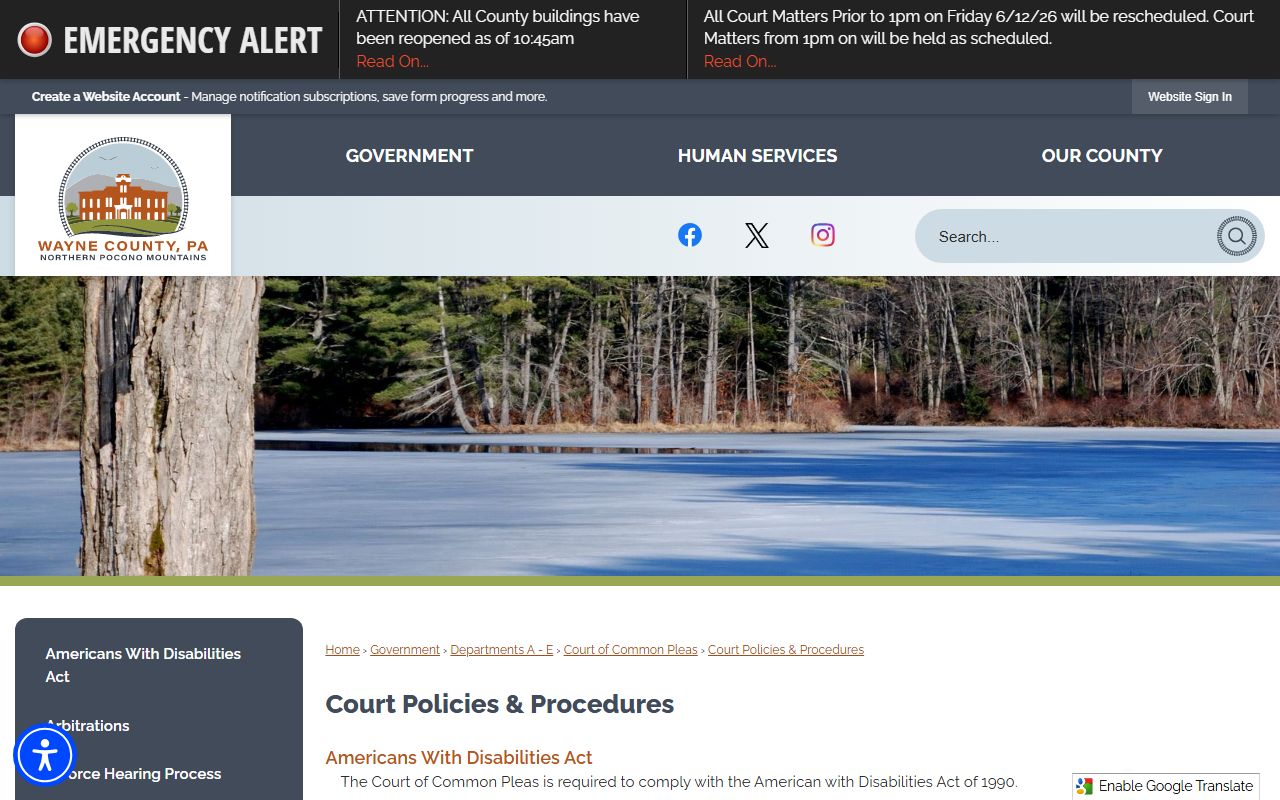
Those local policy links are useful after a docket reveals that a hearing, transcript, PFA, arbitration, or filing step is involved.
Wayne County Docket Number Formats
UJS help examples show the difference between court levels. Common Pleas criminal docket examples begin with CP, such as CP-25-CR-0009999-2017. Magisterial District Court traffic or non-traffic examples begin with MJ, such as MJ-51301-TR-0009999-2017 or MJ-51301-NT-0008888-2017. Appellate examples follow a different format, such as 4000 WDA 2017. These prefixes help identify where the case began and which court office is most likely to hold the underlying file.
| Docket Field | What It Shows |
|---|---|
| Docket number | The court's unique case identifier, including CP, MJ, or appellate format clues. |
| Court name or office | The Wayne County court level or office where the docket is maintained. |
| Case caption | The names used to identify the case, such as Commonwealth versus defendant or party versus party. |
| Filing date | The date the case or docket item was filed. |
| Case status | Whether the docket appears active, closed, disposed, appealed, or pending. |
| Docket entries | The running list of filings, notices, hearings, orders, continuances, dispositions, and financial events. |
A docket number is often the cleanest way to avoid false matches. Names can be misspelled, abbreviated, or shared by more than one person.
Wayne County Courts With Dockets
Wayne County is part of Pennsylvania's 22nd Judicial District. The Court of Common Pleas is the general trial court for felony criminal cases, major civil matters, family matters, PFAs, divorce, custody, support-related issues, and appeals from Magisterial District Courts. The Wayne County research identifies President Judge Janine Edwards, Judge Matthew Meagher, and District Court Administrator Nicole A. Hendrix.
Magisterial District Courts handle many first-contact records: traffic citations, non-traffic summary offenses, landlord-tenant matters, smaller civil claims up to $12,000, preliminary arraignments, bail, and preliminary hearings. These court levels can create linked docket activity in the same criminal or traffic path, so a charge may first show at an MDJ level and then move to Common Pleas if held for court.
| Court | Wayne County Docket Role |
|---|---|
| Court of Common Pleas | Felony criminal cases, major civil, family, PFA, divorce, custody, support, Orphans' Court matters, and MDJ appeals. |
| Magisterial District 22-3-01 | Hawley area district with traffic, summary, landlord-tenant, small civil, and preliminary criminal matters. |
| Magisterial District 22-3-02 | Honesdale, Waymart, Prompton, and nearby township matters, including MDJ-stage hearings and citations. |
| Magisterial District 22-3-04 | Northern and eastern boroughs and townships, including summary, traffic, landlord-tenant, and preliminary hearing dockets. |
The county directory for Magisterial District 22-3-01 shows the Hawley office's local jurisdiction and public contact details.
District-level information helps connect an MJ docket to the correct local office when a case started outside Common Pleas.
Wayne County Court Docket Events
UJS Case Search includes a Scheduled Events Only option for many search types. That filter helps when the goal is to find future hearings instead of older case history. The county Court Case Information page also says common pleas and magisterial calendars are available through the UJS Portal. Still, recent court-office entries may not appear at once, and emergency closures or rescheduling notices can affect hearing plans.
Common docket events include complaint filed, citation issued, summons, hearing scheduled, preliminary arraignment, preliminary hearing, motion, order, continuance, disposition, sentence, appeal, and payment-plan activity. In criminal matters, docket lines may also show bail, warrant events, and sentence terms when public. In civil matters, docket lines may show the claim, service, judgment, lien, petition, order, or appeal activity.
- Docket
- The chronological case activity log.
- Disposition
- The outcome or current result of a charge, claim, or case.
- Continuance
- A court-approved delay of a scheduled event.
- OTN
- The offense tracking number used in Pennsylvania criminal matters.
- Praecipe
- A written request that directs clerk action.
The Wayne County filing process page explains that filings go to the Prothonotary and that hearing-related actions must also be copied to Court Administration.
That local filing rule helps explain why a docket may show both a filed action and later scheduling activity through Court Administration.
Wayne County Dockets and PAePay
Some Wayne County docket searches connect to payments rather than document review. The PAePay traffic ticket and court costs portal lets users search for eligible traffic tickets and court financial obligations. The UJS Pay Online page explains payment limits, card options, and service-fee terms. Payment access does not mean every case can be paid online, and it does not replace court contact when a hearing, warrant, or non-payable status appears.
The PAePay search page is a separate docket-related access point for Wayne County traffic tickets and court costs.
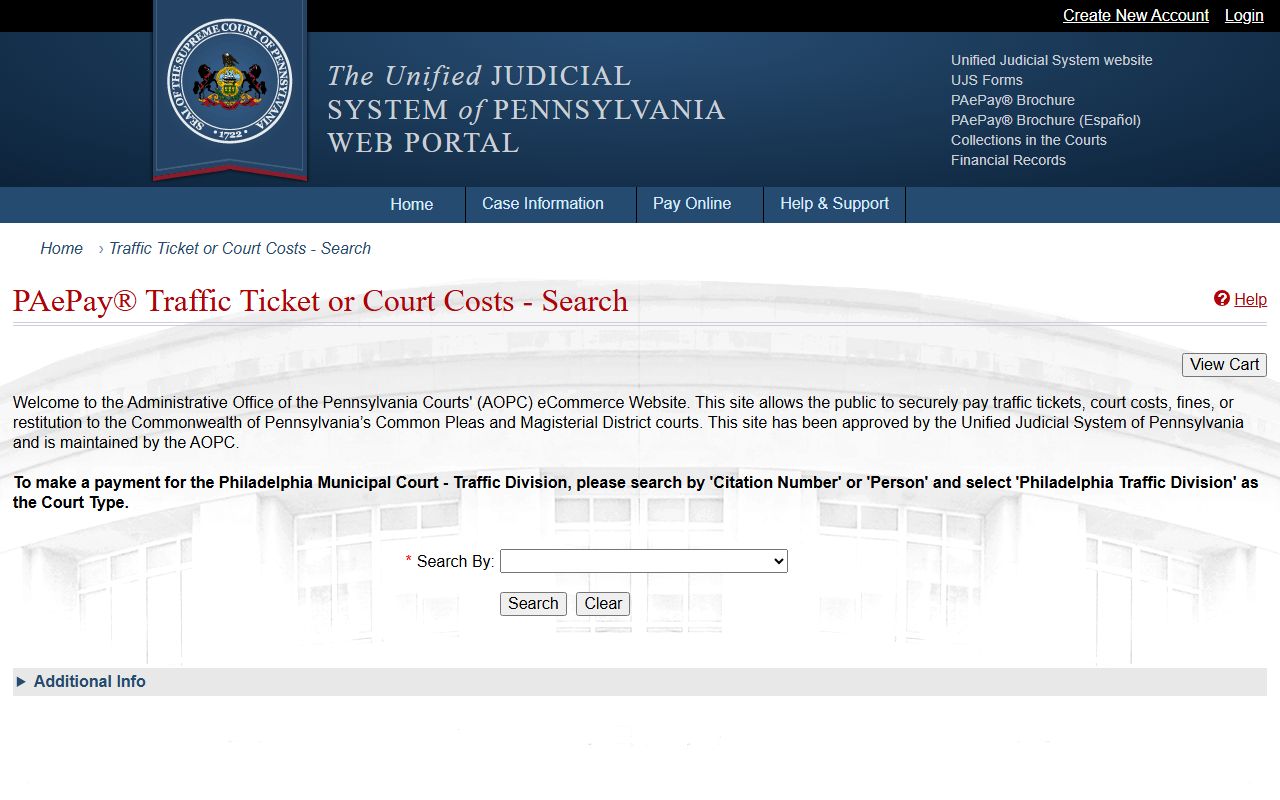
It is most useful when the docket issue is a payment obligation rather than a request for the court file.
The UJS pay-online page adds payment limits and fee terms for online court payments.
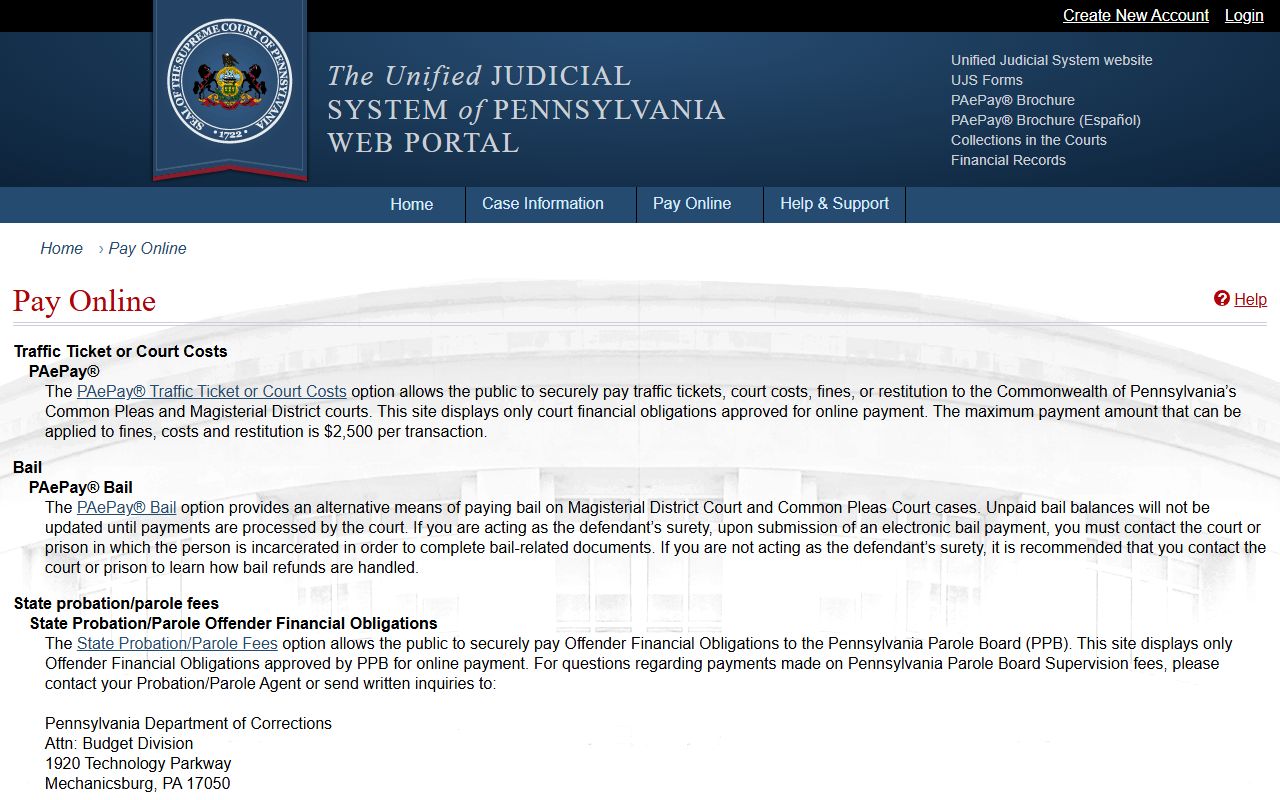
Those limits should be checked before assuming that an open balance can be resolved with a web payment.
Wayne County Dockets vs Files
A docket sheet is often enough to confirm that a Wayne County case exists, learn the court level, identify the filing date, see the next hearing, or read a public disposition. It is not enough when a user needs the actual complaint, petition, order, transcript, exhibit, certified decree, or sealed-record determination. Those items belong to the full case record.
| Docket | Full Case Record | |
|---|---|---|
| Format | Chronological list of case events. | Documents, orders, pleadings, exhibits, and certified copies where available. |
| Access | Often free through UJS when public. | May require an office visit, fee, mail request, or court approval. |
| Best Use | Track status, dates, court level, and disposition. | Prove a filing, review legal papers, or obtain certified records. |
| Wayne County Office | UJS, Common Pleas, or MDJ docket source. | Prothonotary for civil, Clerk of Courts for criminal, Orphans' Court for estate and guardianship files. |
Limits on Wayne County Dockets
Several limits can explain a missing Wayne County docket. UJS notices state that recent entries may not appear immediately, that public docket sheets are not a substitute for a Pennsylvania State Police criminal-history background check, and that juvenile, expunged, limited-access, sealed, and some civil Common Pleas records may not display even with correct search terms. Magisterial District Court electronic web docket sheets also stop being accessible when the official paper record has been or should have been destroyed under the retention schedule.
Wayne County's local Clerk of Courts page adds two local criminal restrictions: juvenile cases are closed to the public, and adult criminal cases involving a child victim of physical or sexual abuse are closed. When a docket is unavailable because of those rules, the next step is not a broader web search. The next step is the correct court office, a lawyer, or a formal court process if the requester has legal standing.
The directory entry for Magisterial District 22-3-02 provides another local court contact point for Wayne County docket questions.
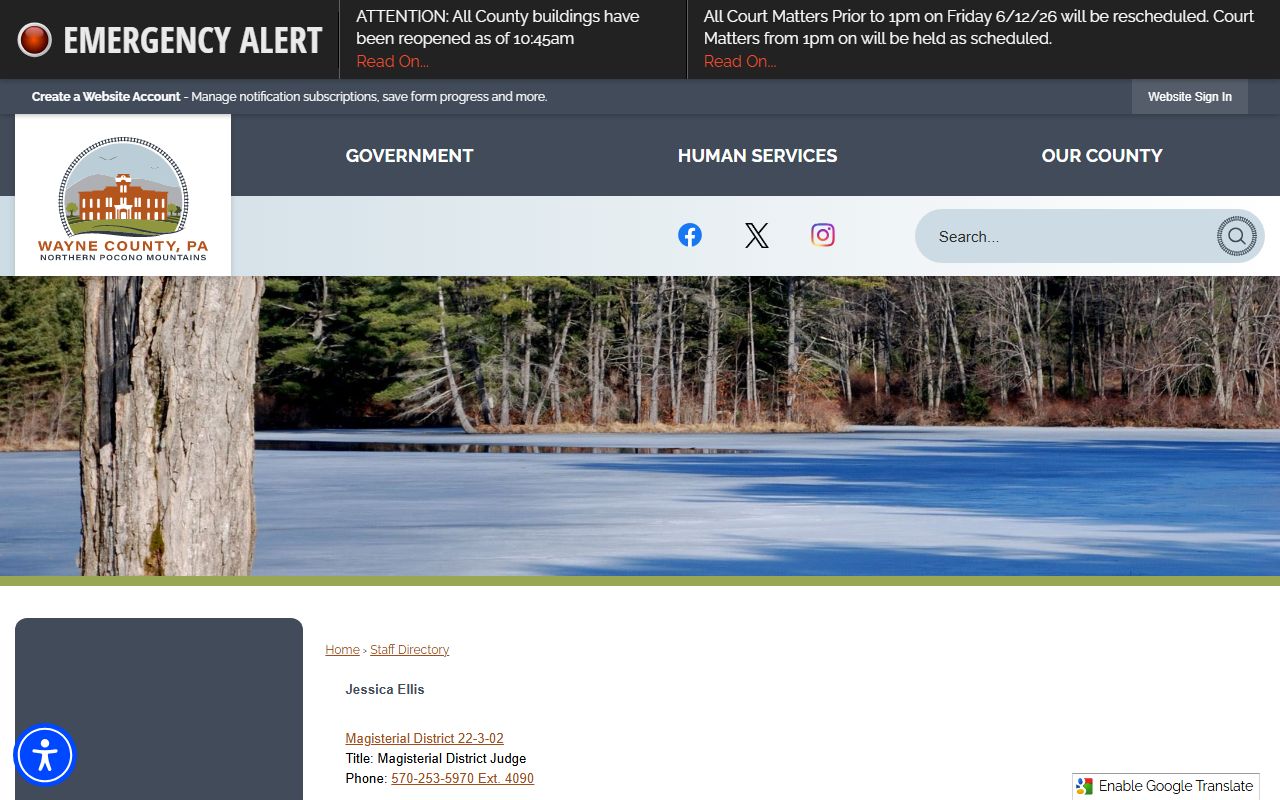
Local MDJ contact details are useful when a docket number starts with MJ or a traffic, summary, landlord-tenant, or preliminary-hearing matter began there.