
Wayne County Criminal Court Files
Wayne County's criminal case records are maintained by the Clerk of Courts. The office maintains criminal records, including adult and juvenile matters, and staff attend proceedings to administer oaths and catalog trial exhibits. The same local office notes that juvenile cases and adult criminal cases involving a child victim of physical or sexual abuse are closed to the public. That local access rule should be considered before assuming a missing public docket means no case exists.
Criminal court records are not the same as jail records or arrest listings. A criminal court record follows the court case once charges have been filed and heard. It may include the charge list, OTN, complaint number, incident number, arresting agency, bail, preliminary hearing activity, arraignment, motions, pleas, trial entries, verdict, sentence, restitution, costs, and appeals. The charge-focused path is covered more closely in Wayne County arrest records and court charges; the criminal case file adds pleas, hearings, disposition, and sentence history.
The Wayne County District Attorney directory identifies A.G. Howell as District Attorney and lists the local prosecution office.
The DA's role is separate from the Clerk of Courts, but both offices affect how criminal case records move through Wayne County courts.
Search Wayne County Criminal Court Records
The main public search route is Pennsylvania UJS Case Search. Wayne County's court case information page says UJS provides Court of Common Pleas and Magisterial District Court docket sheets, plus calendars and ePay. For criminal cases, the portal may accept participant name, docket number, OTN, complaint number, incident number, citation number, SID, attorney, organization, and date-filed search fields. It is free to search, but public docket sheets are not official criminal-history background checks.
- Open UJS Case Search and choose participant name, docket number, OTN, complaint number, incident number, or another criminal case search type.
- Filter to Wayne County when the option appears, then choose the correct court level if the search returns too many matches.
- Review CP criminal docket numbers for Court of Common Pleas cases and MJ docket numbers for Magisterial District Court stages.
- Open the docket sheet and read the charge lines, bail entries, hearing history, case status, disposition, sentence, and costs.
- Contact the Wayne County Clerk of Courts for certified copies, full file access, bail return questions, or older criminal records.
When a person needs counsel, the Wayne County Public Defender page explains local application and eligibility requirements.
Public defense information is relevant because criminal docket events often include preliminary hearings, trial stages, appeals, and revocation proceedings.
Wayne County Criminal Case Stages
Wayne County criminal cases can involve both Magisterial District Courts and the Court of Common Pleas. MDJs conduct preliminary arraignments, set bail, and hold preliminary hearings. The Court of Common Pleas handles felony criminal cases and other criminal matters that move beyond the MDJ stage. A docket may show the path from the first complaint through sentence, or it may show only the public parts that apply to the court level being searched.
Case flow: Charges Filed › Preliminary Arraignment › Preliminary Hearing › Formal Information › Arraignment › Pretrial / Motions › Plea or Trial › Disposition › Sentencing
| Stage | What Happens |
|---|---|
| Preliminary arraignment | An MDJ advises the defendant of charges and may set bail or release conditions. |
| Preliminary hearing | An MDJ decides whether enough evidence exists for charges to move toward Common Pleas. |
| Information and arraignment | The prosecutor files the formal charging document in Common Pleas and the defendant enters a formal response. |
| Pretrial and motions | The docket may show discovery, motions, status conferences, continuances, or plea negotiations. |
| Plea or trial | The case may resolve by guilty plea, dismissal, acquittal, verdict, or another court-approved outcome. |
| Sentencing | The court records sentence terms, fines, costs, restitution, probation, incarceration, or appeal activity when public. |
Wayne County Criminal Record Fields
Criminal court records in Wayne County can show more than a charge name. UJS docket data may include the court office, county, case caption, filing date, docket type, case status, OTN, complaint number, incident number, arresting agency, charges, statute section, grade, disposition, sentence, bail, warrant entries, attorney data, hearing dates, judge, costs, restitution, and payment plan details. Some fields may be blank or hidden because of redaction, sealing, limited access, or case type.
| Field | What It Shows |
|---|---|
| Docket Number | The CP or MJ case number used to track the criminal matter in court. |
| Defendant | The accused person, with addresses and personal data limited or redacted when required. |
| OTN / Complaint Number | Identifiers that connect the court case to Pennsylvania offense tracking and complaint records. |
| Charges | The offense names, statute sections, grade, and charge counts filed in the case. |
| Bail and Warrants | Release conditions, bail events, bench warrant entries, or warrant-related status when public. |
| Disposition | Whether a charge was held, dismissed, withdrawn, guilty, not guilty, or otherwise resolved. |
| Sentence | Incarceration, probation, fines, costs, restitution, or other court-ordered terms after conviction or plea. |
Note: UJS criminal docket sheets are useful for case tracking, but they are not Pennsylvania State Police criminal-history reports.
Wayne County Charges vs Convictions
A charge is an accusation filed in court. A conviction is the result after a guilty plea, guilty verdict, or other qualifying adjudication. Wayne County criminal court records can show charges that were amended, reduced, dismissed, withdrawn, or resolved in a way that does not equal conviction. The distinction matters because docket sheets preserve case history, not just final outcomes.
| Charge | Conviction | |
|---|---|---|
| Stage | Filed allegation after arrest or complaint. | Final or qualifying outcome after plea, verdict, or court action. |
| Proof Level | Based on probable cause and charging decisions. | Requires plea, verdict, or other legal basis for guilt. |
| Docket Effect | May appear even if later dismissed or changed. | Appears with disposition and sentence when public. |
| Background Use | Must be read with caution. | Still subject to expungement, Clean Slate, and reporting rules. |
Wayne County Criminal Access Rules
Criminal court records are affected by the Pennsylvania Criminal History Record Information Act, the judiciary's public-record policies, and local closed-record rules. 18 Pa.C.S. Chapter 91, known as CHRIA, regulates criminal-history record information. The UJS public docket notice is consistent with that framework: a docket search can help find case data, but it is not a substitute for an official criminal-history background check.
The CHRIA chapter is a core source for understanding Pennsylvania criminal-history dissemination rules.
That statute explains why public court docket access and official background-check access are related but not identical.
Key Statutes:
18 Pa.C.S. Chapter 91 regulates criminal-history information dissemination in Pennsylvania.
42 Pa.C.S. 6307 limits juvenile court file inspection.
Sealed and Expunged Criminal Records
Wayne County criminal court records may be unavailable to the public because they are juvenile, sealed, expunged, limited-access, or tied to a child-victim case. UJS notices also state that expunged and limited-access records may not display even with correct search terms. In Pennsylvania, expungement and Clean Slate limited access are different remedies. Expungement removes eligible records more completely. Limited access shields eligible records from ordinary public view while preserving access for some law enforcement and judicial users.
| Sealed / Limited Access | Expunged | |
|---|---|---|
| Public Visibility | Hidden from ordinary public searches. | Removed or treated as unavailable under the expungement order. |
| Legal Source | Clean Slate limited access under 18 Pa.C.S. 9122.2 or court order. | Expungement under 18 Pa.C.S. 9122 when eligible. |
| Agency Access | Some criminal-justice access may remain. | Access is narrower and depends on the expungement order and law. |
| Wayne County Path | Usually tied to the Clerk of Courts and court order. | Petition or statutory process, with DA notice or review when required. |
The Pennsylvania statute for 18 Pa.C.S. 9122 expungement sets the legal base for eligible criminal record removal.
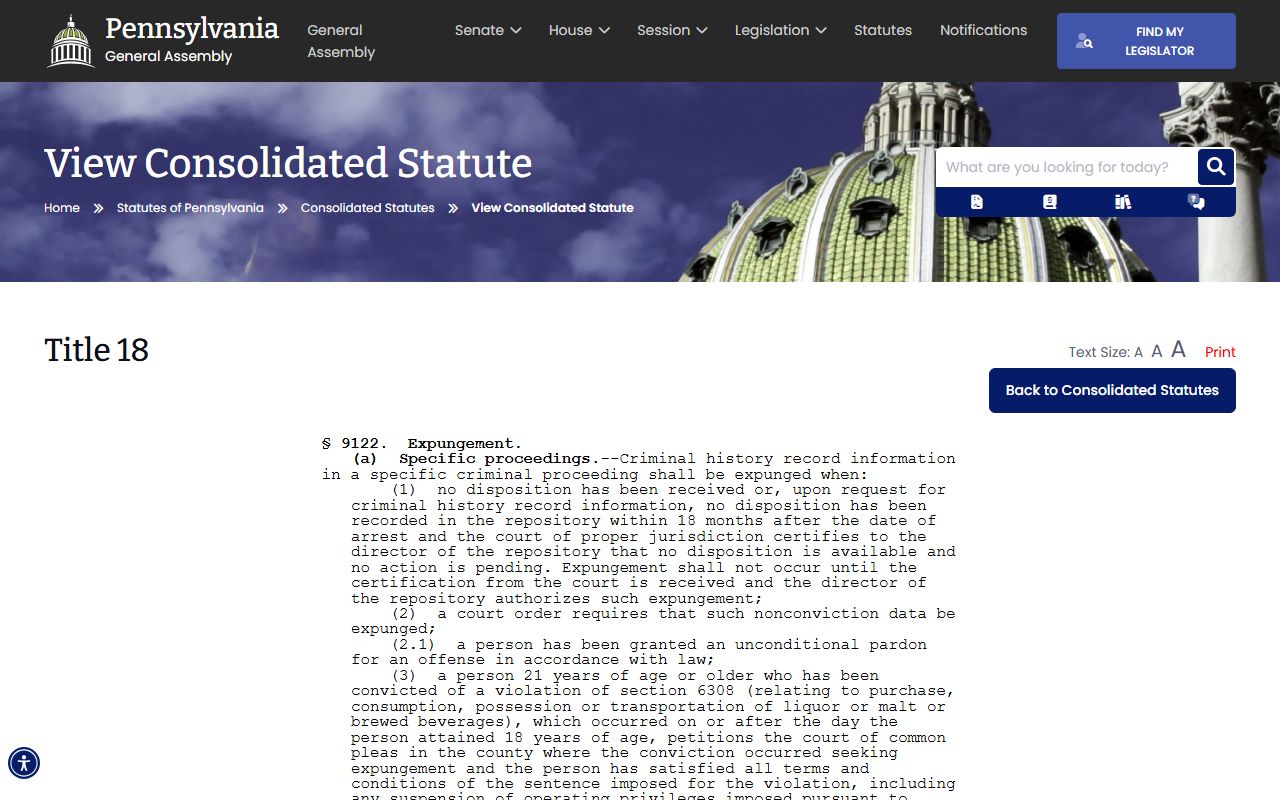
Expungement is narrower than a basic docket correction, so eligibility must be checked against the statute and case outcome.
The separate 18 Pa.C.S. 9122.2 Clean Slate limited access statute covers shielding from public view.
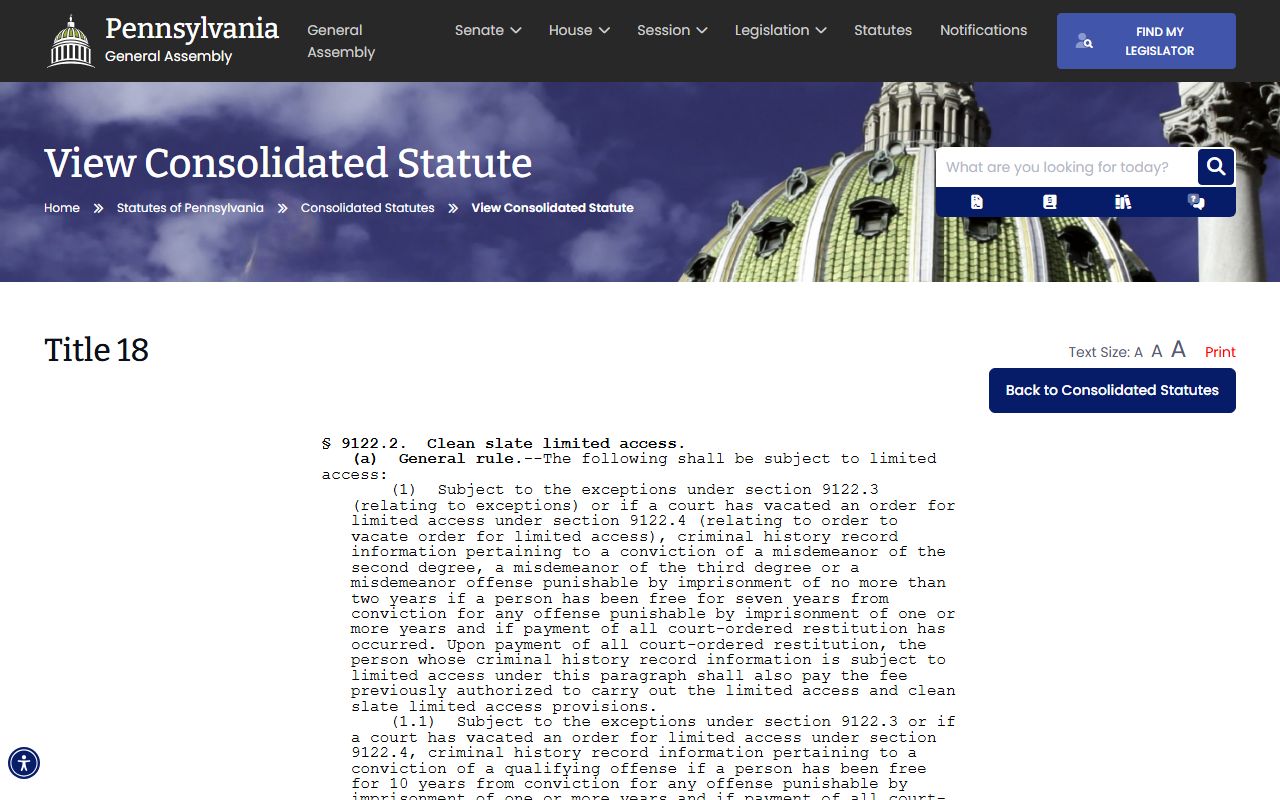
Clean Slate limited access may explain why a case no longer appears in public searches even though court and justice users retain limited access.
Restricted Wayne County Criminal Records
Juvenile criminal files are a key restricted category in Wayne County. The Clerk of Courts says juvenile cases are closed to the public, and state law limits inspection of juvenile court files. Adult criminal cases involving a child victim of physical or sexual abuse are also closed under the local Clerk of Courts notice. Other restrictions can apply to sealed warrants, active investigative records, confidential victim data, mental health proceedings, and personal identifiers.
The juvenile file statute, 42 Pa.C.S. 6307, is directly relevant to Wayne County criminal court record limits.
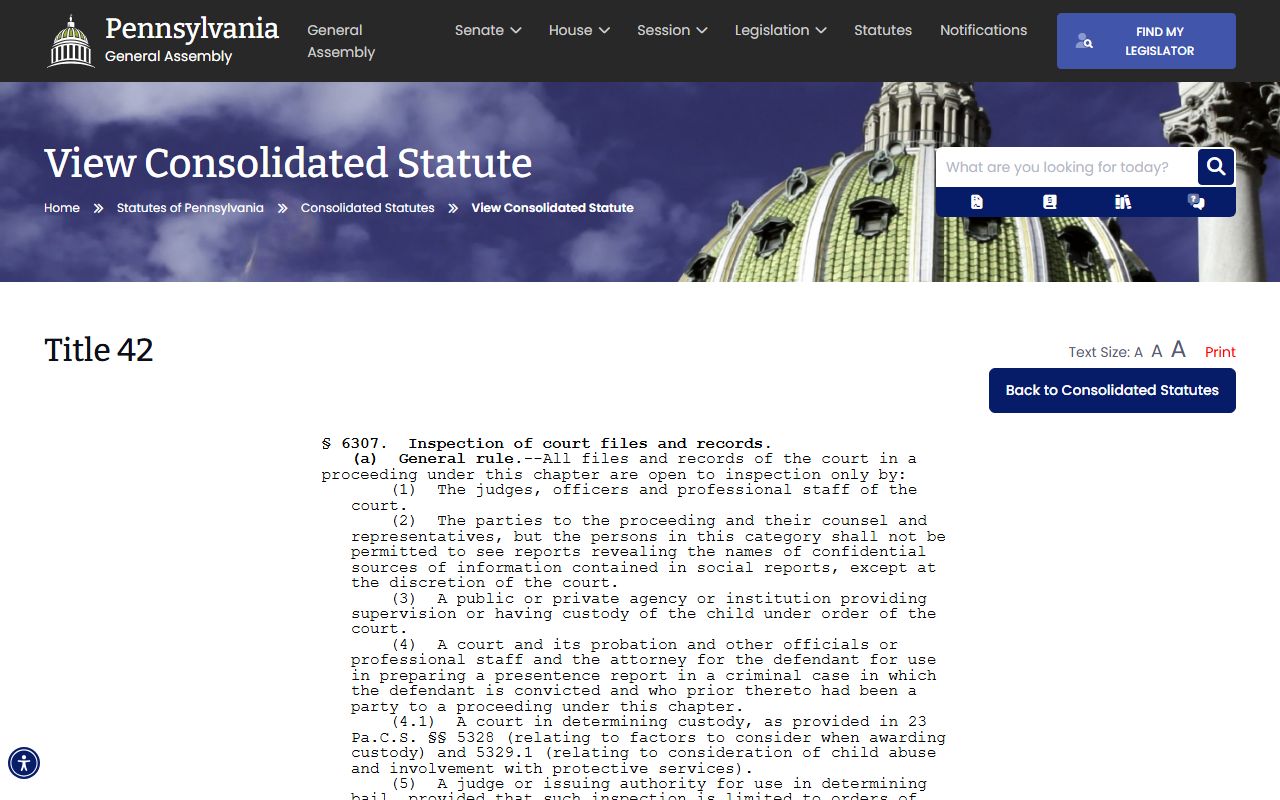
When juvenile access is limited by law, a public docket search is not expected to reveal the full file.
Criminal Background Check Limits
Wayne County criminal court records can be used for casual case research, but they should not be treated as a complete criminal-history product. The UJS public docket service is not affiliated with private fee-based public-record search companies, and docket sheets may omit sealed, expunged, limited-access, juvenile, and restricted child-victim cases. Employers, landlords, insurers, and others with FCRA-regulated needs should use legally compliant background-check channels instead of relying on a court docket printout.
Important: Court docket research is not an FCRA consumer report and may not be complete enough for regulated screening.